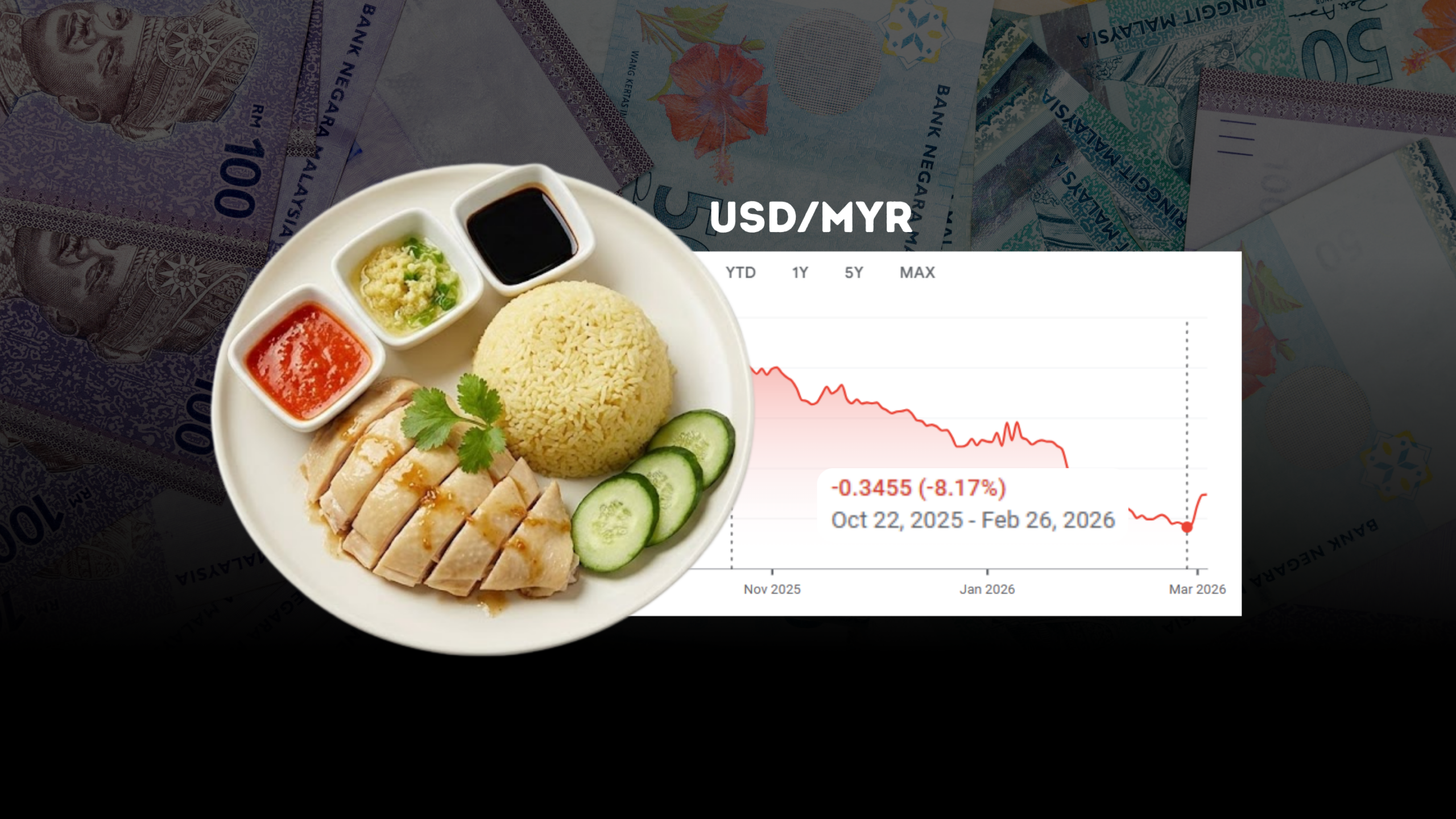
Why is it that when the Malaysian ringgit appreciates, we don’t feel a drop in prices? Your chicken rice even increased instead of decreasing.
The roadside Ayam Gunting is still selling for 10 yuan, no price drop, some even increased in price?
Why did Kopitiam’s chicken rice price increase instead of decrease? Purchasing power has actually decreased.
The ultimate reason is:
You paid for this.
Even if the price increased from 6 yuan to 10 yuan, you still bought it.
To understand the vendor’s pricing logic: A vendor will not price an item at 5 yuan just because the ingredient and labor costs are 3 yuan and they only want to earn a fixed 2 yuan profit.
Instead, the price is determined by how much the customer is willing to pay.
If chicken rice rises to 50 dollars, no one will buy it, and the hawker will lose money. So the hawker will not raise the price to 50 dollars.
The higher the demand, the higher the price. The lower the demand, the lower the price. Eventually, an equilibrium point is reached.
And price increases are easy, while price drops are difficult, even if costs decrease. This is price stickiness.
Menus are not stock quotes. Hawkers do not change prices due to exchange rate fluctuations. Changing prices would require printing new menus, retraining customer expectations, and dealing with psychological anchor shifts.
Unless driven by price competition, it’s impossible to do it proactively.
So the Malaysian ringgit appreciates? What products can truly make you feel like your purchasing power has strengthened?
Pure imported products or services priced in US dollars have theoretically become cheaper.
Here is a list of 50 services and products that become cheaper when the Malaysian Ringgit appreciates.